Key Takeaways
-
Cyber incidents are increasing in frequency, sophistication, and impact.
-
Understanding why is cyber resilience important is essential for business continuity and growth.
-
Cyber resilience focuses on recovery and operational continuity, not just prevention.
-
AI adoption, cloud transformation, and supply chain dependencies are creating new cyber risks.
-
Organisations that invest in resilience are better positioned to protect revenue, reputation, and customer trust.
The Importance of Cyber Resilience
Cyber threats aren’t a matter of “if” but “when.” And that “when” is now. Understanding why is cyber resilience important has become a priority for organisations of all sizes as cyber incidents continue to increase across the UK and globally.
In 2026, resilience is not just about defending your perimeter. It is about recovering quickly, maintaining customer trust, and ensuring your business continues operating when cyber incidents occur. Organisations that prioritise cyber resilience are better equipped to withstand disruption and remain competitive in an increasingly digital world.
The Current Landscape: The Stakes Are Higher Than Ever
1. Explosive Rise in Significant Cyber Incidents
The UK's National Cyber Security Centre (NCSC) reported a 50% increase in highly significant cyber incidents between August 2024 and August 2025.
These incidents go far beyond routine phishing attempts. Many attacks are now disrupting critical infrastructure, public services, and major enterprises, demonstrating the growing importance of resilience.
2. Real-World Impact: Big Names, Big Losses
Several high-profile organisations have experienced the financial and operational consequences of cyber-attacks.
In 2025, the Co-op suffered a cyber-attack that reportedly cost £206 million in lost revenue. Jaguar Land Rover also experienced a severe cyber incident that resulted in factory shutdowns, highlighting how cyber disruptions can ripple throughout complex supply chains.
According to the ICAEW, cyber security is now recognised as a significant business risk rather than solely an IT issue.
3. Widening Attack Surface via AI
The rapid adoption of artificial intelligence is creating new opportunities for innovation, but it is also introducing new vulnerabilities.
According to PwC's 2025 Global Digital Trust Insights report:
-
67% of security leaders reported that generative AI increased their organisation's attack surface.
-
85% of UK businesses plan to increase cyber security investment.
-
Many organisations are prioritising AI-powered threat detection and monitoring capabilities.
4. Underinvestment in Resilience
Despite rising risks, many organisations remain underprepared.
PwC found that only 2% of companies have implemented cyber resilience across the entire organisation. In the UK, many businesses still lack foundational security controls:
5. Cyber Insurance Is Now a Bigger Question
Cyber insurance claims more than tripled in the UK during 2024, according to the Association of British Insurers. The pressure has continued into 2026: the latest UK government Cyber Security Breaches Survey found that 43% of UK businesses reported a cyber breach or attack in the previous 12 months, equivalent to around 612,000 businesses. according to the Association of British Insurers.
Ransomware remains one of the most significant threats, while extortion-based attacks combining distributed denial-of-service (DDoS) attacks and ransom demands continue to rise.
6. Persistent Threat Vectors: Phishing & Ransomware
A Trustwave survey found that phishing remains the most common attack vector, affecting 85% of impacted businesses.
These incidents often exploit human behaviour rather than technical weaknesses alone. This reinforces the importance of training, awareness, and strong organisational processes alongside technology investments.
What Cyber Resilience Really Means Today
Cyber resilience goes beyond preventing attacks. It focuses on ensuring your organisation can prepare for, respond to, and recover from cyber incidents while maintaining critical business operations. Resilience is about building the capability to continue operating even when preventative controls fail.
Core Components of Modern Cyber Resilience
Key elements include:
-
Immutable, Air-Gapped Backups: Recovery data should be protected from alteration or deletion, even if attackers gain access to systems.
-
Hybrid / Multi-Cloud Resilience: Using multiple environments reduces reliance on a single platform and minimises single points of failure.
-
AI-Driven Defences: Advanced machine learning tools can help organisations to detect anomalies earlier, simulate attack scenarios, automate patching and security controls and improve recovery readiness.
-
Continuous Recovery Assurance: Recovery plans should be tested regularly using realistic scenarios. Successful organisations validate recovery capabilities throughout the year rather than treating testing as an annual exercise.
-
Integrated Business Continuity Planning: Cyber recovery should align with wider business continuity and risk management strategies. Recovery is not solely an IT responsibility.
-
Board-Level Accountability: The UK government's updated cyber governance guidance places increasing emphasis on executive and board-level ownership of cyber resilience.
- Leadership Drives Resilience: When leadership teams actively support resilience initiatives, organisations are better positioned to secure investment, improve accountability, and respond effectively during incidents.
Why Cyber Resilience Matters Now
-
Financial Risk: As shown by Co-op and others, cyber incidents can hit the bottom line hard.
-
Reputation and Trust: Customers, partners, regulators expect you to manage cyber risk effectively.
-
Regulatory Pressure: New cyber-governance guidance is pushing resilience to board-level. T
-
Supply Chain Exposure: Attacks like JLR’s highlight how a breach in one part of your supply chain can cascade.
-
Insurability: Without resilience, insurance premiums could spike, or you risk being underinsured.
-
Strategic Advantage: Businesses that recover quickly gain trust, protect revenue, and outcompete less-prepared rivals.
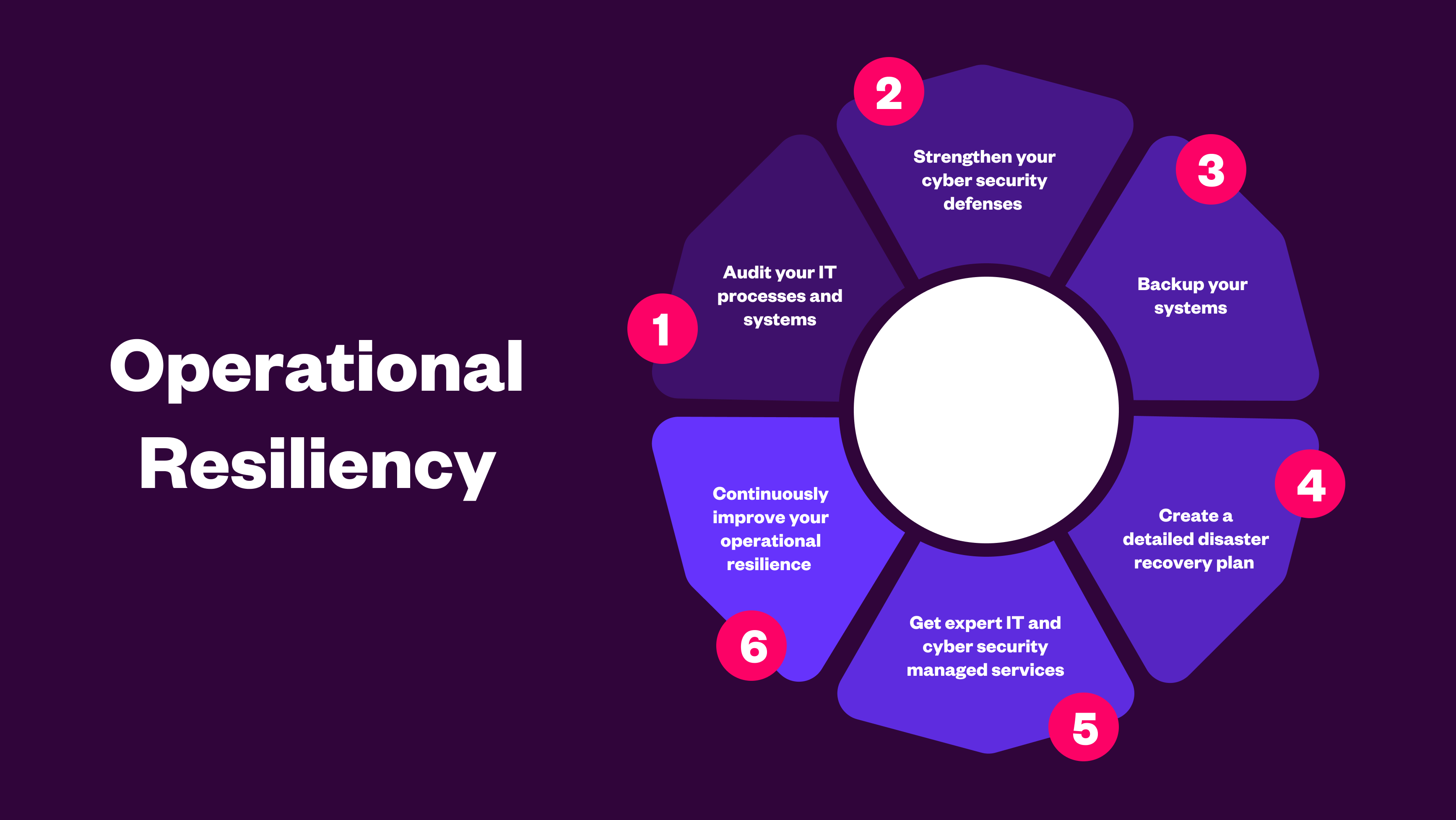
How to Embed Cyber Resilience in Your Organisation
-
Risk & Resilience Assessment: Conduct a maturity assessment to understand your current resilience posture and gaps.
-
Board Engagement: Elevate cyber risk to the board. Use the latest guidance (e.g., the UK’s updated cyber-governance code).
-
Invest in Resilient Infrastructure: Implement immutable backups, air-gapped storage, and hybrid cloud strategies.
-
Adopt AI for Defense and Recovery: Use AI tools for threat detection, simulated attack exercises, and automated recovery checks.
-
Test Recovery Plans Regularly: Run full-scale recovery drills and validate backups - not just for system recovery, but to ensure data integrity (i.e., that backup data isn’t infected).
-
Train the Human Layer: Continuous phishing simulations and behavioral training are essential — the human factor is still the weakest link.
-
Review Cyber Insurance Strategy: Work with brokers to align your resilience investments with insurance coverage – a strong resilience posture can reduce premiums.
-
Monitor & Report: Use key metrics (MTTR, recovery time objective, recovery point objective) and report to leadership regularly.
Cyber Resilience in 2026: Why It Matters Now
Editor's update (2026): This section has been added to reflect the latest developments in the cyber threat landscape since this article was originally published.
In 2026, cyber resilience is more critical than ever. The continued adoption of AI, increased regulatory scrutiny, growing supply chain interconnectivity, and evolving ransomware tactics are creating new challenges for businesses across every sector. Attackers are increasingly targeting operational technology, cloud environments, and third-party providers, making resilience a strategic business priority rather than a technical requirement.
Businesses are also facing higher expectations from customers, insurers, regulators, and stakeholders. Demonstrating resilience has become a key differentiator, helping organisations build trust and prove they can maintain services even during disruption.
Organisations that invest in proactive resilience measures are better positioned to respond to emerging threats, minimise disruption, and maintain stakeholder confidence. For many businesses, success in 2026 is defined not by whether they experience a cyber incident, but by how effectively they recover from one.
This is another reason why cyber resilience is important for organisations seeking long-term stability, growth, and competitive advantage.
Final Thought: Why Is Cyber Resilience Important for Modern Businesses?
As cyber threats continue to evolve, understanding why cyber resilience is important has never been more critical. Organisations can no longer rely solely on prevention. The ability to recover quickly, minimise disruption, and maintain customer trust is now a fundamental business requirement.
By investing in the right technologies, processes, and leadership commitment, organisations can strengthen resilience, protect revenue, and build long-term competitive advantage. With support from Celerity, businesses can move beyond reactive cyber security and develop a proactive resilience strategy that keeps operations running when it matters most.
Take the Next Step Towards Greater Cyber Resilience
If you're looking for practical guidance tailored to your organisation,speak to one of our cyber experts at Celerity. Our specialists can help you assess your current resilience posture, identify vulnerabilities, strengthen recovery capabilities, and build a roadmap that supports long-term business resilience.
Whether you're reviewing your disaster recovery strategy, modernising your cyber security approach, or preparing for future threats, Celerity can help you build a stronger, more resilient future.
Want a clear snapshot of your resilience gaps?
Get your AI-powered Recovery Risk Report today. Identify vulnerabilities, test your recovery playbooks, and design a roadmap for real-time resilience.
Frequently Asked Questions
Cyber resilience is an organisation's ability to prepare for, respond to, recover from, and adapt to cyber incidents while maintaining essential business operations.
Cyber resilience helps organisations minimise downtime, protect revenue, maintain customer trust, and ensure business continuity when cyber incidents occur.
Cyber security focuses on preventing attacks, while cyber resilience focuses on maintaining operations and recovering quickly when incidents occur.
Celerity helps organisations assess resilience maturity, identify vulnerabilities, strengthen recovery capabilities, and implement practical resilience strategies aligned to business objectives.
A comprehensive strategy typically includes secure backups, disaster recovery planning, business continuity management, employee training, AI-driven security tools, governance, and regular testing.





.png)
.png)