
<img alt="" src="https://www.instinct365intelligent.com/810470.png" style="display:none;">

Build a controlled, costed pathway to post-quantum cryptography.

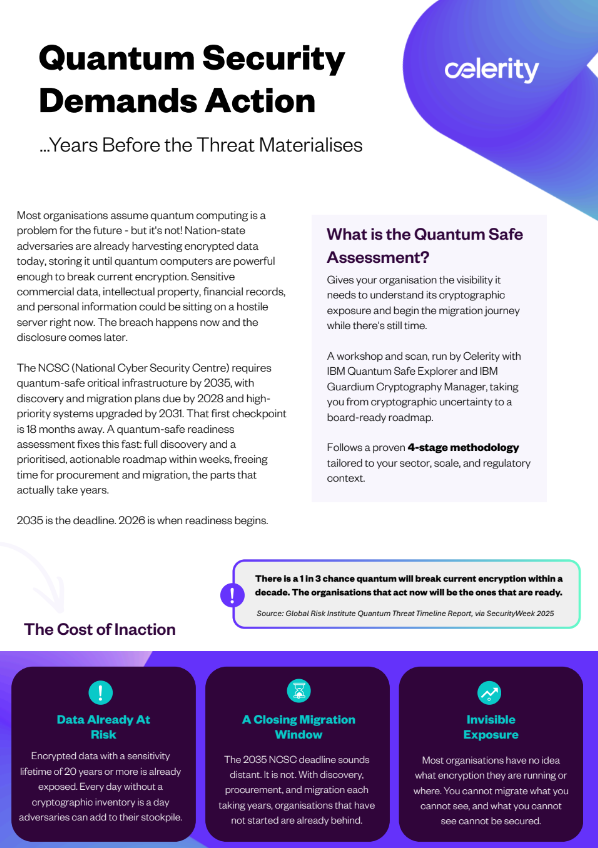
The NCSC recommends that UK organisations complete their move to quantum-safe cryptography by 2035, with the first milestone in 2028: mapping where cryptography is used and setting a plan. Start now and you choose the cost, timing and risk.

Starting early gives you time to choose your approach, budget and timing.


Celerity helps complex organisations build and deliver a controlled migration to post-quantum cryptography. We combine IBM discovery technology with enterprise security, infrastructure and transformation expertise to identify exposure, prioritise action and create a practical route from assessment to implementation.

Quantum Safety Explained

Most internet encryption relies on maths that today’s computers cannot solve in a practical time. Quantum computers are expected to solve some of them, which would make much of that encryption easy to break. 
triangle-exclamation-solid
Quantum computers threaten today's encryption

Most internet encryption relies on maths that today’s computers cannot solve in a practical time. Quantum computers are expected to solve some of them, which would make much of that encryption easy to break. 


user-hoodie-duotone-solid
Attackers can steal data now and read it later

 Criminals and state actors can copy encrypted data today and decrypt it once quantum technology arrives. Data that must stay confidential for 10+ years, such as patient and financial records, is already at risk. 

brain-circuit-solid
Quantum safe means moving to new algorithms

Post-quantum cryptography, based on NIST's published standards, resists quantum attacks. Migrating touches applications, servers, devices and suppliers, so the first step is knowing where your encryption lives.

Quantum safe, explained

 Most internet encryption relies on maths that today’s computers cannot solve in a practical time. Quantum computers are expected to solve some of them, which would make much of that encryption easy to break. 


triangle-exclamation-solid
Quantum computers threaten today's encryption

Most internet encryption relies on maths that today’s computers cannot solve in a practical time. Quantum computers are expected to solve some of them, which would make much of that encryption easy to break. 


user-hoodie-duotone-solid
Attackers can steal data now and read it later

 Criminals and state actors can copy encrypted data today and decrypt it once quantum technology arrives. Data that must stay confidential for 10+ years, such as patient and financial records, is already at risk. 

brain-circuit-solid
Quantum safe means moving to new algorithms

Post-quantum cryptography, based on NIST's published standards, resists quantum attacks. Migrating touches applications, servers, devices and suppliers, so the first step is knowing where your encryption lives.

1 in 3 chance that quantum breaks current encryption within a decade.

Global Risk Institute Quantum Threat Timeline Report, SecurityWeek, 2025

The NCSC Migration Timeline

 In March 2025, the NCSC set a milestone timeline for UK organisations to move to post-quantum cryptography.
It is guidance rather than law, but regulators, insurers and auditors are likely to measure your progress against it. 


NOW 2-1

Prepare

Agree ownership, find your quantum risks and rank them.

2028 2

Discover & Plan

Define your migrations goals, complete a full discovery of the cryptography across your estate, and build an initial migration plan.
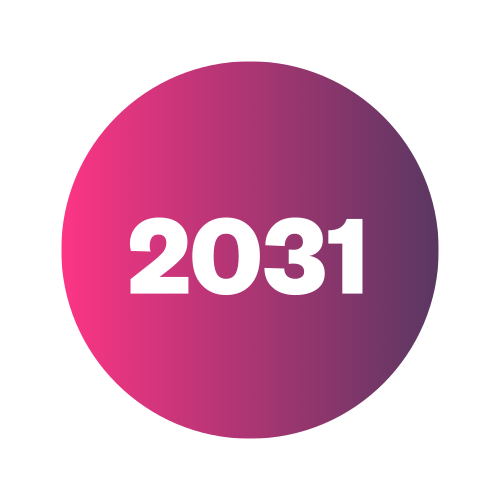
2031 2-1

Prioritise & Start

Complete your early, highest priority migration activities and refine the plan into a full roadmap.
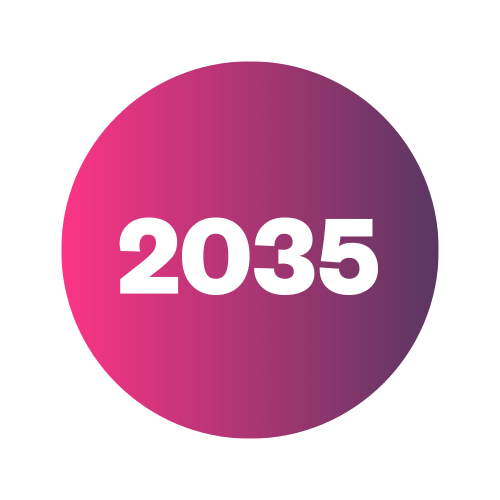
2035 2

Finish Migration

Migration is complete across your system, services and products.

  • Now

    Begin discovery discussions and planning ahead.

  • 2028

    Complete a full discovery of your estate, and build an initial migration plan.

  • 2031

    Have migrated your critical prioritised assets.

  • 2035

    Migration is complete across your systems, services and products.


Discovery is the slowest part of the process. Starting today leaves time to choose your path.

Built for the people who own the decision

Select your role to see what the assessment answers for you.

Know what is exposed and what migration will disrupt

You own the infrastructure and applications that hold the data. The assessment shows which systems use vulnerable cryptography and how to sequence the work so the business keeps running.

  • A cryptographic inventory for the agreed scope
  • A target architecture your delivery teams can build to
  • A sequenced plan that protects live services


Show regulators and insurers a credible plan

You are accountable for protecting the data and for evidencing that protection. The assessment gives you a prioritised risk register and a plan you can put in front of auditors.

  • A risk register ranked by sensitivity, criticality and exposure
  • A clear view of your position against NCSC timelines
  • Evidence to support audit and insurance conversations

Turn an open-ended risk into a budget line

Quantum migration is a multi-year programme. The assessment converts it into a phased, costed roadmap that the board can approve, rather than an unknown liability.

  • A costed, phased migration roadmap
  • A board-ready executive summary
  • Clear priorities, so spend follows risk


Your Quantum Safe Assessment

A structured four-step assessment, delivered by IBM and Celerity experts, takes you from cryptographic uncertainty to a board-ready plan.

webinar
Cyber Gradient1

Executive Briefing

Align leadership on quantum risk and the NCSC milestones.
Cyber Gradient2

Cryptographic discovery

Scan applications and infrastructure with IBM Quantum Safe Explorer to build a Cryptographic Bill of Materials.
Cyber Gradient3

Risk and gap analysis

Rank vulnerable algorithms by data sensitivity, criticality and regulatory exposure.
Cyber Gradient4

Roadmap and next steps

Produce a costed, prioritised remediation plan and migration pathway.

white paper

Download the assessment scope

See the methodology, typical engagement timeline, required stakeholders and complete list of deliverables.


Download the assessment scope
Screenshot 2026-11-02 113304

Preparing for Quantum: Insight from Celerity & IBM specialists


Our cyber security consultant Holly Ellwood and IBM's Hamish Cunningham give a short introduction to why quantum safe migration matters now, and what the Quantum Safe Assessment involves.

Frequently Asked Questions

Do we need to be quantum-ready before we start?

No. The assessment begins with discovery, so it works for organisations at any stage. Most arrive without a cryptographic inventory, and building one is the first deliverable.

What is quantum safe cryptography?

Quantum safe cryptography, also called post-quantum cryptography, uses algorithms designed to resist attacks from quantum computers. Organisations need to move their existing encryption onto these algorithms before quantum computers are capable of breaking the current ones. 

Who delivers the assessment?

IBM leads the workshop and provides the IBM Quantum Safe Explorer tooling. Celerity experts deliver the workshops, tailor the methodology to your sector and support you through the roadmap and implementation. Celerity is an IBM Platinum Partner with deep experience in IBM Power, IBM i, AIX and mainframe environments, and holds ISO 9001, 14001 and 27001 accreditations.

What should large organisations complete by 2028?

The NCSC recommends that organisations complete discovery of their cryptographic use and begin planning their priority migrations by 2028. The assessment is designed to support that first milestone.

How long does cryptographic discovery take?

It depends on the scope agreed at the start of the engagement, including the number of systems and the access available. We confirm the timeline during scoping.

Which systems and environments can be assessed?

Cloud, hybrid and on-premises environments can be assessed within the agreed scope. Coverage depends on the systems, access and tooling included.

Does the assessment cover non-IBM technology?

Non-IBM environments can be included where access and tooling allow. We confirm what is in scope during scoping.

What information and access does Celerity require?

Access to the relevant systems and documentation, time from your stakeholders for workshops, and agreed controls for how we handle your information. The full list is in the assessment scope datasheet.

What happens after the assessment?

Celerity can support implementation as a follow-on service, including pilots, migration delivery, and ongoing progress reporting and governance.

Is the NCSC 2035 target a legal deadline?

No. The NCSC describes 2035 as a recommended target rather than a legal deadline. Regulatory and insurance requirements may set their own expectations, and the assessment checks your position against them.

Resources

Read more about the Quantum threat and response with our below resources

Screenshot 2025-07-07 163002

Quantum Ready: Securing Data in the NHS

Why harvest now, decrypt later matters for sensitive data, and how to start building a quantum-ready strategy.

Download Whitepaper

Infrastructure Page 1 (2)

Preparing for the Quantum Encryption Threat: What You Need to Know

An introduction to the quantum encryption threat and the practical steps organisations can take now.

Read Blog
Quantum-2

Quantum Ready - Securing Data in the NHS

In this thought-provoking video podcast, Celerity, GovNews and healthcare leaders explore how quantum computing could disrupt digital systems and what that means for data security, resilience, and clinical outcomes.

Watch Podcast